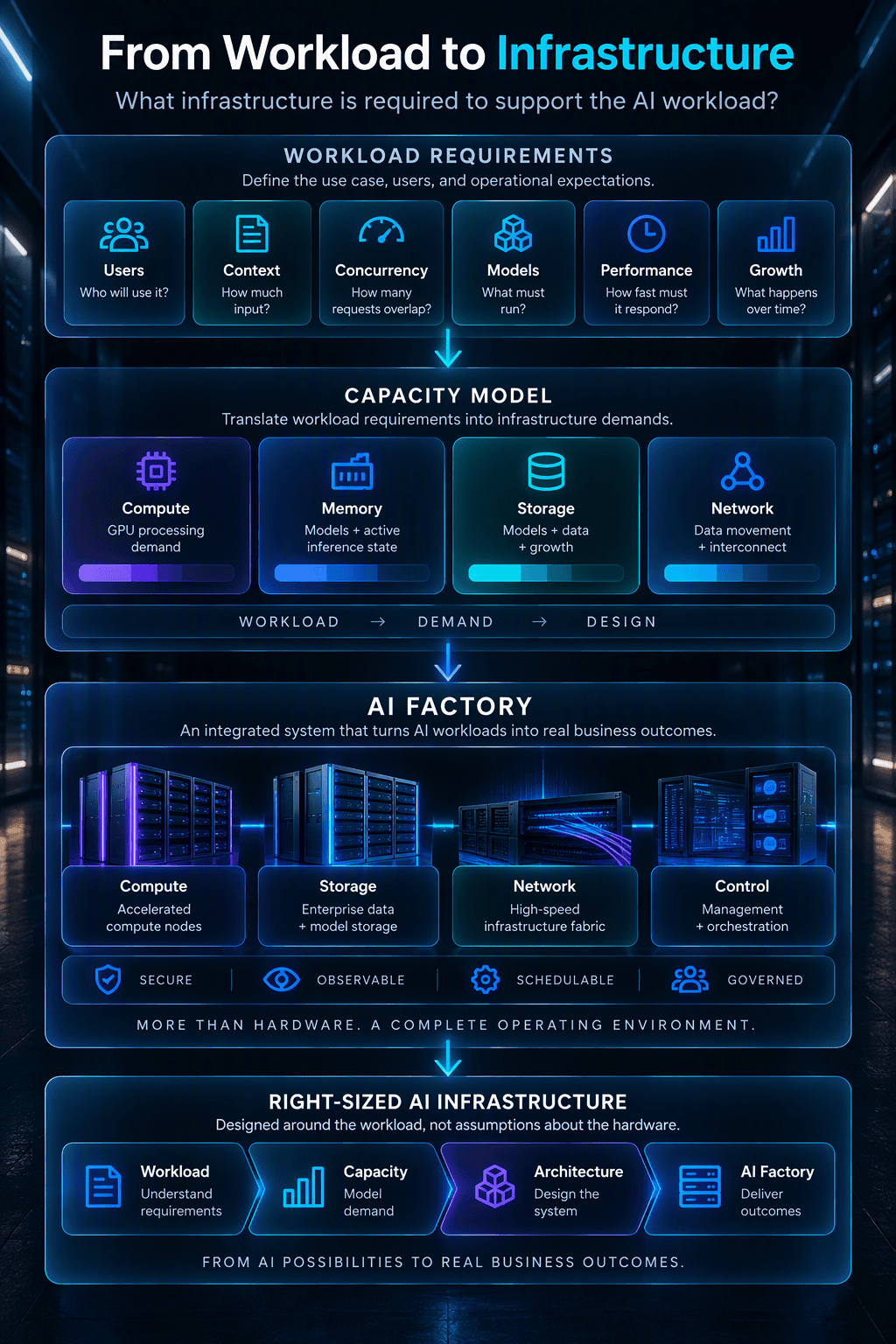
AI INFRASTRUCTURE WORKFLOW
WHAT ACTUALLY CONSUMES INFRASTRUCTURE RESOURCES
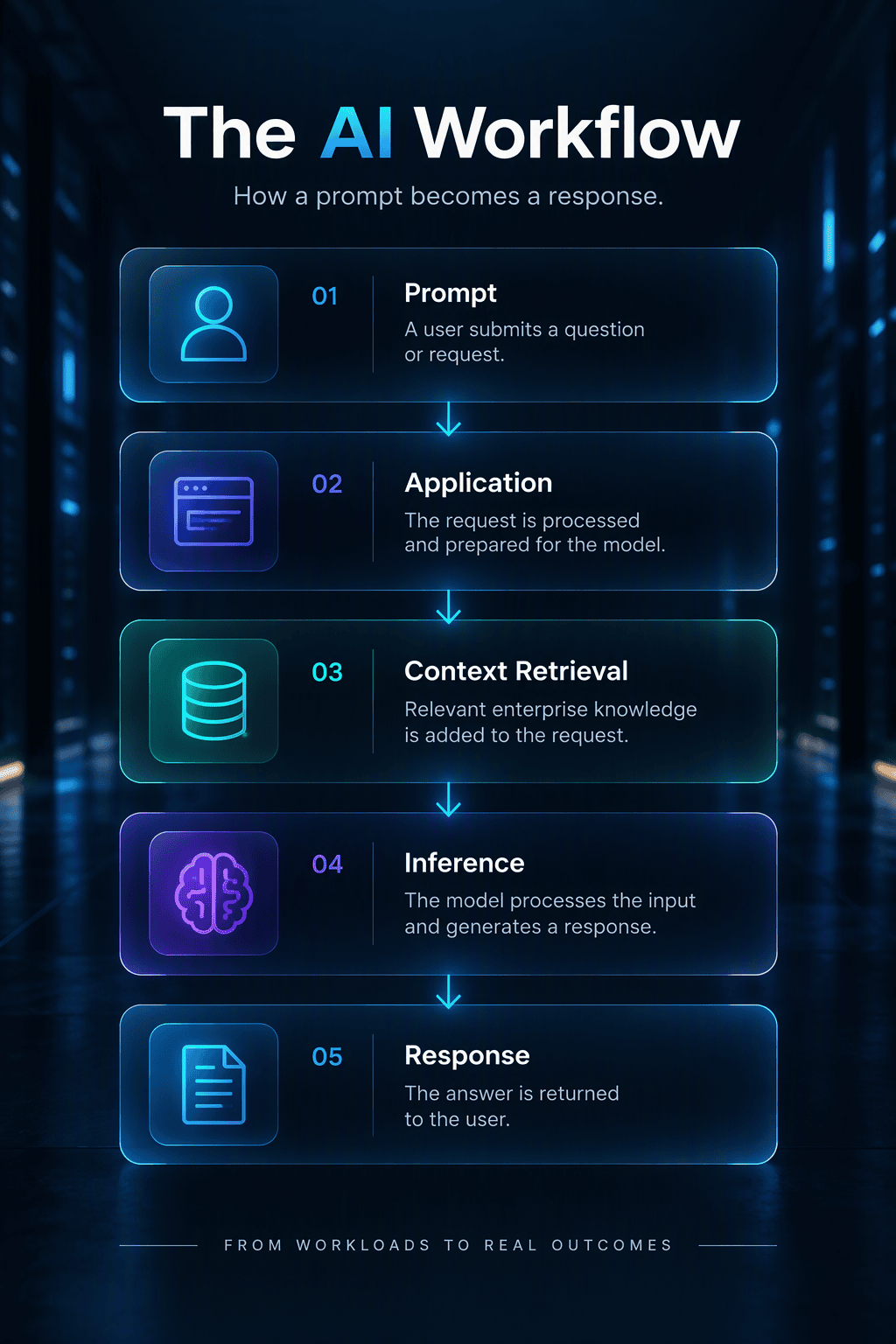
Reality looks more like: User → Application → Context Retrieval → Model Selection → Inference Pipeline → Response Generation → Logging → Governance.
Every stage introduces resource requirements. Every stage introduces latency. Every stage influences sizing decisions.
STEP 1
The User Request
Examples Include:
- Asking a chatbot a question
- Requesting code generation
- Triggering an AI agent
- Summarizing documents
- Searching enterprise knowledge
- Number of users
- Concurrent users
- Request frequency
- Availability expectations
STEP 2
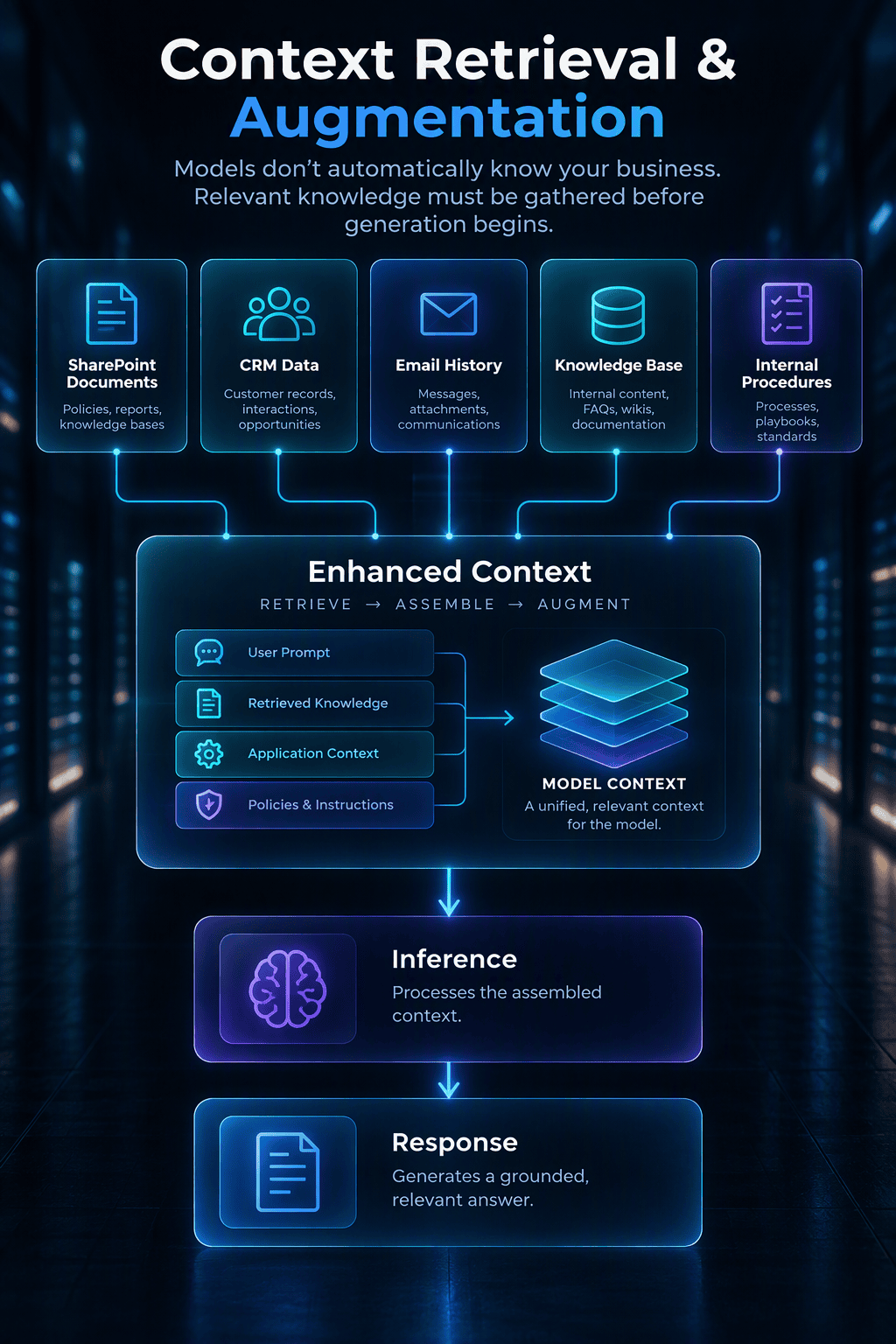
Context Retrieval and Augmentation
Examples Include:
- SharePoint documents
- CRM data
- Email history
- Knowledge bases
- Internal procedures
- Data placement
- Storage requirements
- Retrieval performance
- Security controls
STEP 3
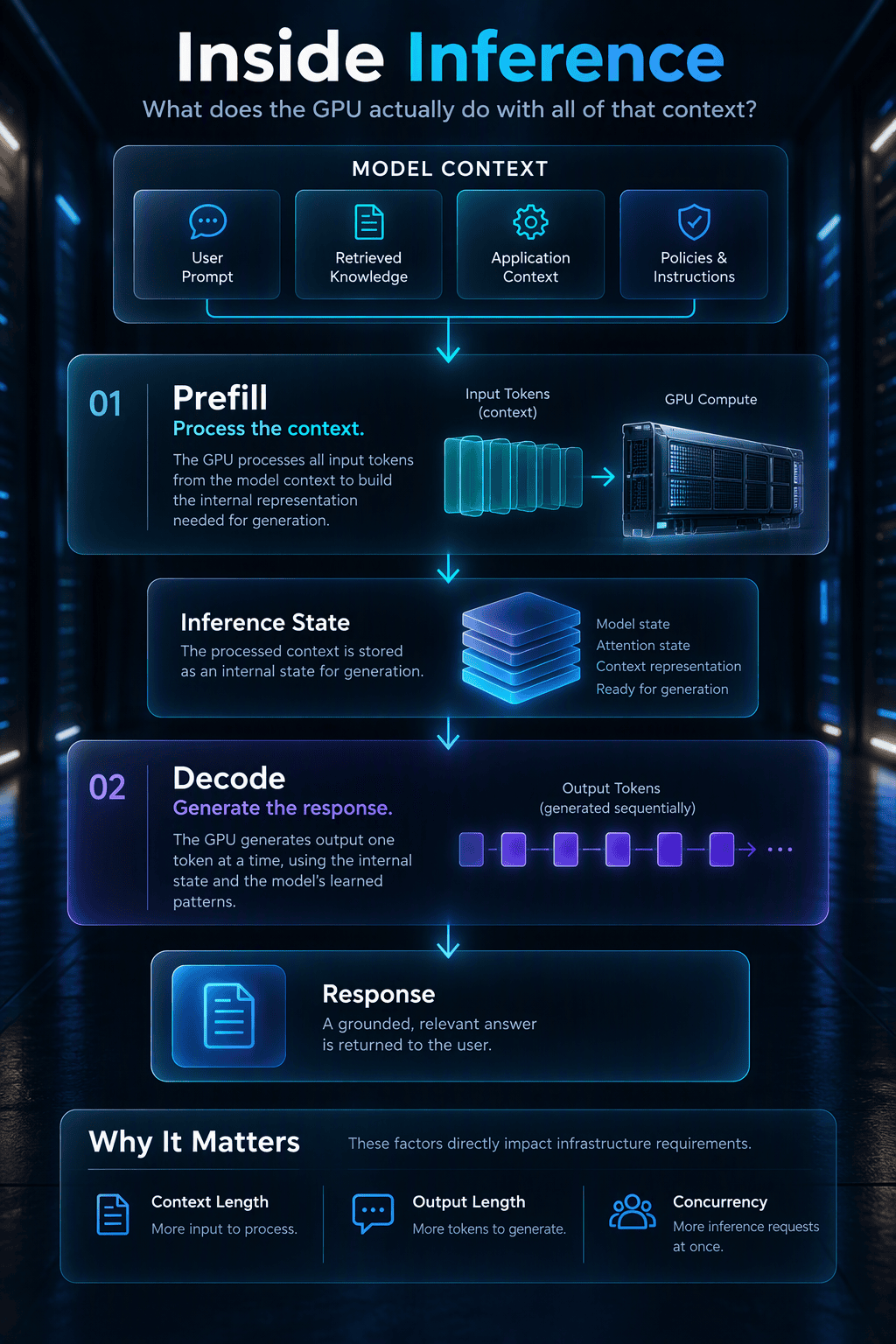
Prefill
More context means:
- More memory consumption
- More GPU utilization
- Longer processing times
- Legal contract/document analysis
- Reviewing immense codebases
- Long-form video processing
- Book or Library ingestion
- Quarterly performance analyses
- Legacy system assessments
STEP 4
Decode
During decoding, the model produces output one token at a time, building an answer based on the information, instructions, and business context that were assembled during the previous stages of the workflow.
Whether the result is a customer response, code recommendation, document summary, business insight, or agent action, decoding is where infrastructure resources are transformed into usable outcomes.
The speed and quality of this process are influenced by several factors:
- Available infrastructure capacity
- Model complexity
- Concurrent demand
- Context size
- Response length
For organizations, decoding is where technical architecture becomes user experience. Faster, more reliable response generation can improve employee productivity, customer experiences, operational efficiency, and adoption of AI-powered services.
The goal is not simply to generate more tokens. The goal is to deliver relevant, trustworthy outcomes at the speed the business expects.
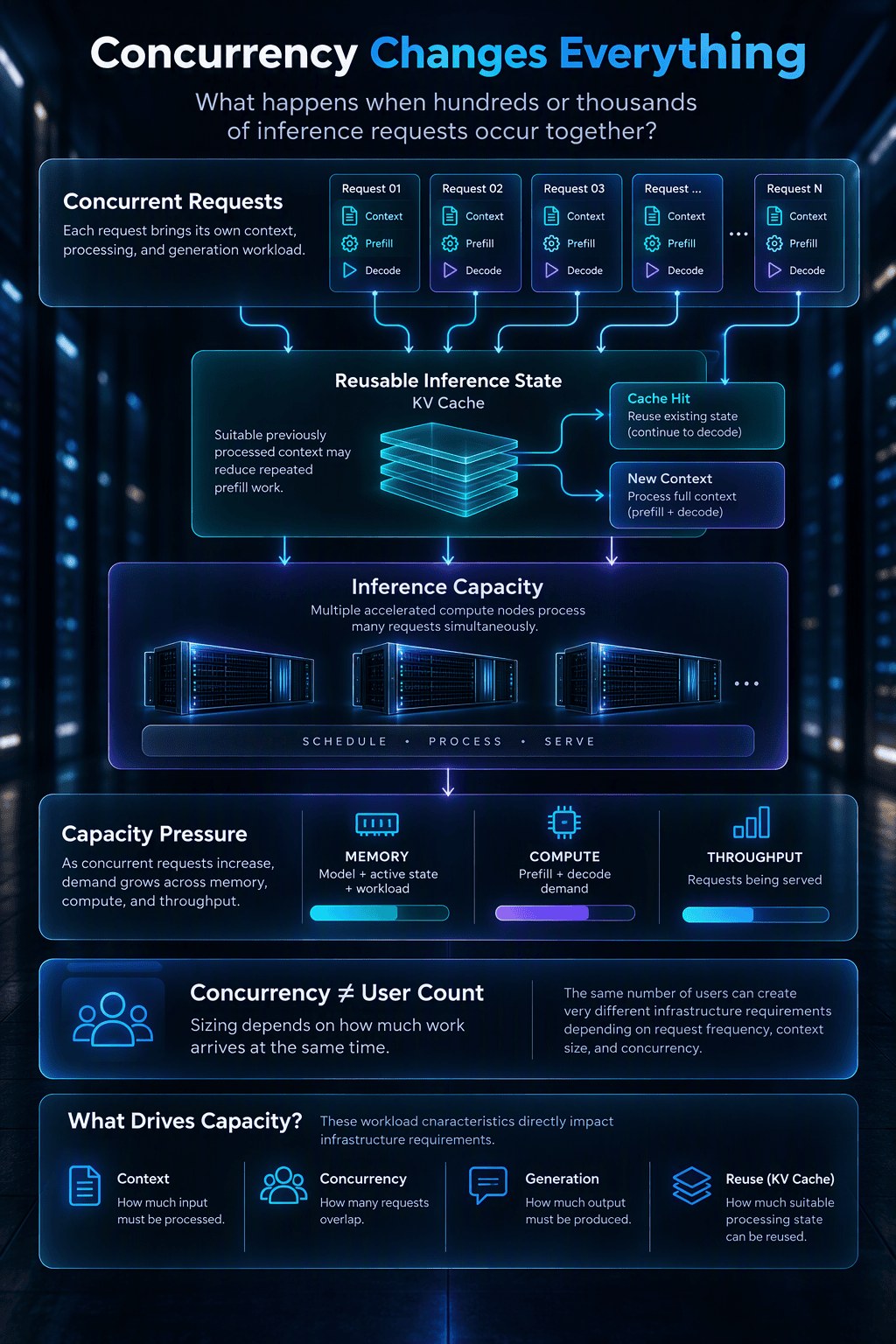
STEP 5
Repeat at Scale
Now consider:
- 500+ users
- Multiple agents
- Multiple models
- Peak demand periods
What matters isn't a single request. What matters is concurrency. This is one of the largest drivers of infrastructure requirements discussed during our AI Factory Sizing workshops and technical engagements.
This prompts us to ask the question: Can work be Reused?
This is where we consider KV Cache. In many scenarios, portions of previously processed context may be reused rather than reprocessed from scratch.
Potential benefits include:
- Reduced latency
- Reduced GPU work
- Improved throughput